

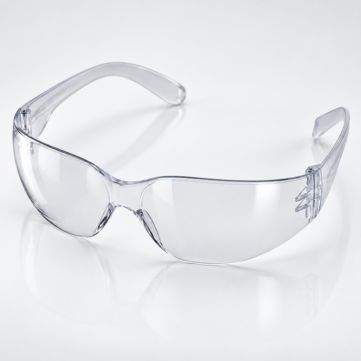
Nevada Safety Glasses
£2.95£3.54 (each)
- Lightweight design with ultra-soft nose bridge
- 10-curve single polycarbonate lens
- Adjustable side arms, temple ratchet & neck cord
- 99.9% UV protection
- Conforms to EN166:2001, Optical Class 1 & FT
You may also like…

Features & Benefits
- Nevada Safety Glasses provide lightweight eye protection
- Ultra-soft nose bridge supports a comfortable fit
- 10-curve single polycarbonate lens provides wraparound coverage
- Fully adjustable side arms help users refine the fit
- Temple ratchet allows the lens angle to be adjusted
- Low-impact protection for suitable workplace applications
- 99.9% UV protection helps shield the eyes from ultraviolet light
- Adjustable neck cord helps keep the glasses close when not in use
- Optical Class 1 supports clear vision and extended wear
- FT rating confirms low-energy impact performance at extreme temperatures
- Conforms to EN166:2001
- Suitable for warehouses, packing areas, workshops and general maintenance
- Available for delivery throughout mainland UK
Common Uses
- Packaging and order fulfilment
- Warehouse duties
- Product inspection
- Assembly work
- Light manufacturing
- Stock handling
- General maintenance
- Indoor and outdoor workplace tasks
- Workshop duties involving low-impact hazards
- Garden and grounds maintenance
- DIY projects
- Visitor eye protection
- Light engineering tasks
- Production environments
- General occupational eye protection
Nevada Safety Glasses
Our Nevada Safety Glasses combine a lightweight design with adjustable fitting features for suitable low-impact workplace applications.
The single polycarbonate lens has a 10-curve profile that provides wraparound coverage across the front and sides of the eye area. In addition, the ultra-soft nose bridge supports comfort during regular wear.
Fully adjustable side arms and a temple ratchet allow users to refine the fit and lens position. Meanwhile, the adjustable neck cord helps keep the glasses accessible between tasks.
The lens provides 99.9% UV protection. Furthermore, the glasses conform to EN166:2001, Optical Class 1 and FT low-energy impact requirements at extreme temperatures.
Nevada Safety Glasses Specifications
| Specification | Details |
|---|---|
| Product type | Lightweight safety spectacles |
| Keyphrase | Nevada Safety Glasses |
| Lens material | Polycarbonate |
| Lens construction | Single lens |
| Lens profile | 10 curve |
| Nose bridge | Ultra soft |
| Side arms | Fully adjustable |
| Temple adjustment | Ratchet |
| Impact protection | Low impact |
| UV protection | 99.9% |
| Neck cord | Adjustable |
| Safety standard | EN166:2001 |
| Optical class | Class 1 |
| Impact marking | FT |
| FT classification | Low-energy impact at extreme temperatures |
| Delivery area | Mainland UK |
The exact fit will vary between users. Therefore, each wearer should check the adjustment, coverage and compatibility with other personal protective equipment before use.
Lightweight Nevada Safety Glasses
The lightweight construction helps reduce unnecessary bulk during routine workplace tasks.
This design can benefit employees who need protective eyewear for packing, inspection, assembly, maintenance and general warehouse work. Furthermore, the adjustable fit can help users position the glasses more comfortably.
Comfort remains individual. The glasses should sit securely without creating excessive pressure around the nose, ears or sides of the head.
Lightweight construction does not change the stated protection level. Always select protective eyewear according to the identified hazards and workplace risk assessment.
Ultra-Soft Nose Bridge
The ultra-soft nose bridge supports the glasses and helps improve comfort during regular wear.
Position the bridge correctly so the lens remains centred in front of both eyes. The glasses should feel secure without slipping during normal head movement.
Inspect the nose bridge before each use. Replace the glasses if it becomes damaged, detached, permanently distorted or unable to support the eyewear correctly.
Do not cut, heat or modify the nose bridge. Unapproved alterations may affect the fit and protective coverage.
10-Curve Polycarbonate Lens
The single polycarbonate lens has a 10-curve profile designed to follow the shape of the face and provide wraparound coverage.
This design can help protect the front and sides of the eye area from suitable low-energy particles approaching from different angles.
However, the lens does not create a sealed barrier. Therefore, these glasses should not replace sealed safety goggles where the task involves:
- Chemical splashes
- Fine airborne dust
- Gas
- Vapour
- Smoke
- Biological fluids
- Pressurised liquids
- Molten materials
- High-impact particles
Complete a suitable risk assessment before choosing the required eye protection.
Adjustable Side Arms
The fully adjustable side arms allow users to refine how the glasses sit around the head.
Adjust both sides evenly and check that the lens remains centred. The arms should support the glasses without causing discomfort or interfering with hearing protection, headwear or other PPE.
Do not force the adjustment beyond its intended range. Excessive pressure may damage the arms or adjustment mechanism.
Check the side arms regularly for cracks, distortion and loose components. Remove the glasses from service if they no longer remain securely adjusted.
Temple Ratchet Adjustment
The temple ratchet allows the wearer to adjust the angle of the lens.
This feature can help users position the glasses for better coverage around the brow and cheek area. It may also improve compatibility with different facial profiles.
Adjust the temple ratchet before entering the work area. Make small changes and check the position after each adjustment.
The lens should provide suitable coverage without obstructing vision or touching the eyelashes. Once adjusted, move the head normally to confirm that the glasses remain secure.
Adjustable Neck Cord
The adjustable neck cord helps keep the glasses close when the wearer temporarily removes them.
Adjust the cord so it supports the intended use without creating excessive tightness. When the glasses hang from the cord, keep the lens away from rough surfaces, tools and machinery.
The neck cord does not replace correct adjustment of the side arms while the glasses are being worn.
Take extra care around:
- Moving machinery
- Conveyor systems
- Rotating equipment
- Projecting components
- Vehicle parts
- Areas with snagging hazards
The neck cord has no specified breakaway feature. Therefore, remove it where the workplace risk assessment identifies an entanglement hazard.
99.9% UV Protection
The lens provides 99.9% UV protection according to the supplied specification.
This feature helps protect the eyes during suitable indoor and outdoor activities involving ultraviolet exposure. Consequently, the glasses may suit users who regularly move between warehouse, yard and delivery areas.
UV protection does not mean that the glasses provide protection against every form of optical radiation.
They have not been specified for:
- Welding
- Laser work
- Electrical arcs
- Intense specialist light sources
- Infrared hazards
- Any application requiring tinted or filtered lenses
Use task-specific protective eyewear where the risk assessment identifies a specialist optical hazard.
EN166:2001 Compliance
The Nevada Safety Glasses conform to EN166:2001 for personal eye protection.
EN166 covers general requirements for protective eyewear, including optical quality, construction and relevant mechanical performance classifications.
The stated conformity applies to the glasses in their supplied condition. Therefore, users should check the product markings and accompanying information before use.
Do not drill, cut, heat or otherwise modify the glasses. Unapproved alterations may affect the fit, coverage and stated protective performance.
Optical Class 1
Optical Class 1 identifies the lens class intended for continuous or extended wear under the EN166 classification system.
The optical quality supports tasks where users need to maintain clear vision while wearing protective eyewear.
However, users should stop work if the lens becomes:
- Scratched
- Clouded
- Cracked
- Contaminated
- Distorted
- Loose
- Difficult to see through
Clean or replace the glasses before continuing the task.
FT Low-Impact Classification
The FT marking confirms low-energy impact protection at extreme temperatures under the stated EN166:2001 classification.
The letter F relates to low-energy impact performance, while T indicates testing at extreme temperatures.
This classification does not indicate medium-energy or high-energy impact protection. Therefore, do not use the glasses where the task requires a higher mechanical strength rating.
Grinding, high-speed cutting and work involving forceful particle projection may require different eye protection or an additional face shield.
Choosing Nevada Safety Glasses
Choose protective eyewear according to the task, environment and hazards identified by the workplace risk assessment.
Before selecting these glasses, consider:
- Particle size
- Particle speed
- Direction of impact
- Temperature
- UV exposure
- Chemical exposure
- Dust levels
- Required side coverage
- Length of wear
- Compatibility with other PPE
- Whether sealed goggles are necessary
- Whether a face shield is also required
Low-impact glasses may suit many routine workplace tasks. However, they should not be used for higher-risk work simply because the adjustable design provides a comfortable fit.
Adjusting Nevada Safety Glasses
Complete all adjustments before entering the work area.
To adjust the glasses:
- Place the nose bridge comfortably on the nose.
- Position the side arms around the head.
- Adjust both arms evenly.
- Use the temple ratchet to refine the lens angle.
- Check that the lens remains centred.
- Confirm coverage around both eyes.
- Move the head normally to check stability.
- Adjust the neck cord where appropriate.
- Confirm compatibility with other PPE.
Do not continue using the glasses if the adjustments fail to hold their position.
Checking the Fit
The glasses should provide stable coverage without causing excessive pressure.
Check that:
- The lens sits in front of both eyes
- The nose bridge rests comfortably
- The side arms remain secure
- The temple ratchets hold their position
- The glasses do not slide during normal movement
- Vision remains clear
- Other PPE does not displace the glasses
- The neck cord does not create a snagging risk
Different facial shapes may affect coverage. Employers should therefore confirm that the selected eyewear fits each user correctly.
Nevada Safety Glasses with Other PPE
Users may need to wear these glasses alongside:
- Safety helmets
- Hearing protection
- Dust masks
- Respiratory protective equipment
- Protective clothing
- Gloves
- Face shields
Check that each item remains correctly positioned when worn together. One piece of PPE should not displace another or create an unsafe gap.
Where a face shield is required, safety glasses may form part of the complete protection system. However, they do not automatically replace the additional protection required by the risk assessment.
Inspecting Nevada Safety Glasses
Inspect the glasses before every use.
Check the:
- Polycarbonate lens
- Nose bridge
- Side arms
- Temple ratchets
- Neck cord
- Adjustment points
- Product markings
- Overall fit
Do not use the glasses if the lens has cracks, deep scratches, distortion or severe contamination.
Likewise, replace them if the nose bridge, arms or ratchets become damaged. A damaged adjustment component may prevent the glasses from remaining securely positioned.
Cleaning Nevada Safety Glasses
Remove loose dust before wiping the polycarbonate lens because trapped particles may cause scratches.
Where appropriate, clean the glasses with lukewarm water, mild soap and a soft cloth. Rinse away residue and allow the glasses to dry naturally.
Avoid:
- Abrasive cloths
- Scouring materials
- Strong solvents
- Unverified chemical cleaners
- Excessive heat
- Sharp scraping tools
- Rough paper products
Follow any cleaning instructions supplied with the product. Replace the glasses if cleaning does not restore clear vision.
Storing Nevada Safety Glasses
Store the glasses in a clean, dry location away from direct sunlight, excessive heat and contamination.
Where possible, keep them inside a suitable case or clean storage area. Do not place tools, components or heavy objects on top of the lens or adjustable arms.
Avoid storing the glasses with chemicals or abrasive materials. In addition, keep the neck cord arranged so it does not become tangled or damaged.
Correct storage helps preserve the lens, adjustment components and general condition.
When to Replace Nevada Safety Glasses
Replace the glasses if:
- The lens becomes deeply scratched
- Vision becomes distorted
- The lens cracks
- The nose bridge becomes damaged
- The side arms no longer adjust correctly
- The temple ratchets fail to hold
- The neck cord becomes damaged
- The glasses no longer fit securely
- Impact damages the product
- Heat distorts the eyewear
- Chemicals affect the lens
- Product markings become unreadable
After a significant impact, remove the glasses from service even if no damage appears immediately visible.
Important Protection Limitations
These glasses provide low-impact protection to the stated specification. They are not suitable for every workplace hazard.
Do not rely on them as protection against:
- Medium-energy impact
- High-energy impact
- Chemical splashes
- Gas and vapour
- Fine dust requiring sealed eyewear
- Molten metal
- Hot solids
- Welding radiation
- Laser radiation
- Electrical arcs
- Biological splash hazards
- Any application requiring sealed goggles
- Any hazard requiring a full-face shield
Always follow the workplace risk assessment and relevant safety procedures.
Also Known As
Customers may also describe this product as:
- Lightweight safety glasses
- Adjustable safety glasses
- Polycarbonate safety spectacles
- Wraparound safety glasses
- Ratchet-arm safety glasses
- UV-protection safety glasses
- Low-impact safety glasses
- EN166 safety glasses
- Optical Class 1 safety glasses
- Workplace protective glasses
- Industrial safety eyewear
- Protective work spectacles
- Safety glasses with neck cord
These names may describe eyewear with different lenses, adjustment systems and impact ratings. Therefore, check the complete specification before ordering.
Food Safety Information
The glasses are not intended for direct food contact.
Where employees use them in food-production or food-handling environments, businesses should include the glasses and neck cord within their hygiene, cleaning and contamination-control procedures.
Inspect the complete product regularly and replace damaged parts or glasses where they could create a contamination risk.
Suitability for a particular food-production environment will depend on the workplace risk assessment and hygiene requirements.
PPWR Compliance Information
The EU Packaging and Packaging Waste Regulation, Regulation (EU) 2025/40, establishes requirements for packaging placed on the EU market. Further information appears in the European Commission’s packaging guidance.
The safety glasses are personal protective equipment rather than packaging. However, businesses placing the packaged product on the EU market should assess the associated retail and transit packaging against the applicable requirements.
This description does not constitute a declaration of PPWR compliance.
Sample Requests
A sample pair may be available so you can assess the fit, adjustment, comfort, visibility and compatibility with other workplace PPE.
A sample assessment does not replace a workplace risk assessment or confirm suitability for every user and task.
To discuss sample availability, please contact us:
- Email: sales@expresspackaging.co.uk
- Telephone: 0121 622 2347
Nevada Safety Glasses Delivery
We can deliver Nevada Safety Glasses throughout mainland UK.
Check the supplied product markings and inspect the glasses before use. Select protective eyewear according to the identified workplace hazards and required protection level.
Nevada Safety Glasses Illustration Only
Product photographs are for illustration purposes. The exact appearance, shade and finish may vary slightly.
Other PPE, tools and accessories shown in product images are not included unless the listing specifically states otherwise.
Always use the written specification, product markings and supplied instructions when assessing suitability.
Additional information
| Weight | 0.05 kg |
|---|---|
| Style | Nevada |
Only logged in customers who have purchased this product may leave a review.


Reviews
There are no reviews yet.