
Yellow Refuse Sacks
£28.67£23.89 (per 200 box)
- Size: 457mm x 737mm x 991mm / 18″ x 29″ x 39″ – width x total gusset x height
- 140 gauge polythene construction
- Coloured design helps with waste identification and segregation
- Supplied in boxes of 200 sacks
- Ideal for recycling, waste separation and general commercial waste disposal


Features & Benefits
- Yellow refuse sacks for colour-coded waste collection
- Manufactured from recycled LDPE polythene
- 140-gauge material thickness
- Approximately 35 microns thick
- Suitable for medium-duty general waste applications
- Yellow colour helps distinguish selected waste streams
- Useful for commercial, educational and public-sector environments
- Suitable for offices, warehouses, schools and cleaning contractors
- Gusseted construction provides additional internal capacity
- Open-top design supports quick and straightforward filling
- Flexible material adapts around soft and irregularly shaped waste
- Suitable for appropriately sized bins and sack holders
- Nominal size of 18 x 29 x 39 inches
- Approximately 450mm x 725mm x 975mm
- Supplied in boxes of 200 sacks
- Boxed format keeps unused sacks organised and protected
- Clean and unused sacks may suit specialist flexible-plastic recycling services
Common Uses
Our yellow refuse sacks are suitable for collecting:
- General office waste
- Paper and lightweight cardboard
- Empty product packaging
- Plastic wrapping
- Retail waste
- Warehouse waste
- Housekeeping waste
- Hotel-room rubbish
- Light catering waste
- Washroom waste
- Classroom and educational waste
- Exhibition and event rubbish
- Cleaning cloths and disposable wipes
- Packaging offcuts
- Empty wrappers and containers
- Soft and bulky waste
- Light manufacturing waste
- General non-hazardous commercial refuse
- Designated colour-coded waste streams
The meaning assigned to a yellow sack can differ between organisations and collection services. Therefore, always confirm the correct colour with your facilities manager, local authority or waste contractor.
Yellow Refuse Sacks 140-Gauge
Our yellow refuse sacks provide a practical solution for collecting general waste and supporting colour-coded waste-management systems.
The distinctive yellow appearance makes the sacks easy to differentiate from black, clear, green, red, blue and other coloured bags. Consequently, businesses can allocate them to a selected internal waste stream and help staff place waste into the correct collection.
These sacks are manufactured from recycled low-density polythene, commonly abbreviated to recycled LDPE. The flexible material adapts around paper, packaging, wrappers and other suitable soft or irregularly shaped waste.
Each sack has a nominal thickness of 140 gauge, equivalent to approximately 35 microns. This medium-duty specification provides a useful balance between flexibility, capacity and everyday performance for suitable commercial refuse.
The gusseted construction allows the bag to expand beyond its flat face width. Meanwhile, the open top allows users to fit, fill and gather the sack without an integral drawstring or adhesive closure.
We supply these yellow refuse sacks in boxes containing 200 bags.
Yellow Refuse Sacks Size and Specification
The product specification is:
- Colour: yellow
- Nominal imperial size: 18 x 29 x 39 inches
- Nominal metric size: approximately 450mm x 725mm x 975mm
- Measurement order: face width x total open width x height
- Material: recycled LDPE polythene
- Material thickness: 140 gauge
- Approximate thickness: 35 microns
- Construction: gusseted refuse sack
- Closure: open top without an integral tie
- Typical duty: medium duty
- Box quantity: 200 sacks
The stated dimensions are nominal manufacturing measurements. Therefore, small production tolerances may apply.
Additionally, the imperial measurements provide a commonly used rounded description of the sack rather than exact mathematical conversions from the metric dimensions.
Please measure your bin and consider the intended contents before ordering.
Understanding the Sack Measurements
We show the sack dimensions as face width x total open width x height.
The 450mm / nominal 18-inch measurement represents the width across the face of the sack while it lies flat.
The 725mm / nominal 29-inch measurement represents the total open width, including the material folded into the side gussets. Consequently, the sack expands beyond its visible face width when opened.
The 975mm / nominal 39-inch measurement represents the overall height from the sealed base to the open top.
The 725mm measurement does not represent the width of one completely flat front panel. Instead, some of the material forms the gussets and creates additional capacity when the bag opens.
Furthermore, bulky contents use some of the available width and height as the polythene expands around them. Therefore, a rigid item measuring close to the complete stated dimensions may not fit comfortably.
Always allow additional clearance rather than selecting a sack that only just matches the dimensions of your bin or intended contents.
Yellow Colour for Waste Identification
Yellow refuse sacks can help businesses and organisations distinguish a selected waste stream from rubbish collected in other coloured bags.
For example, an organisation may choose yellow sacks for a particular department, building, collection route or category of non-hazardous waste. The visible colour can help staff recognise the intended collection and reduce accidental mixing.
Yellow sacks may prove particularly useful in:
- Offices
- Schools and colleges
- Retail premises
- Warehouses
- Hospitality businesses
- Public buildings
- Events and exhibitions
- Cleaning companies
- Facilities-management operations
- Local collection schemes
However, yellow does not have one universal meaning across every waste-management system. One organisation may use yellow for a selected recycling stream, while another may assign it to general waste, rejected materials or a particular collection area.
Therefore, never rely on colour alone. Clearly label the relevant bins and confirm the collection requirements with your waste contractor.
These general-purpose sacks are not certified clinical or hazardous-waste bags. Consequently, they must not replace regulated or specially printed sacks where legislation or a collection agreement requires them.
Recycled LDPE Polythene Construction
These yellow sacks are manufactured from recycled low-density polythene.
LDPE creates flexible film that can adapt around soft, bulky and irregularly shaped materials. As a result, it is widely used for refuse sacks, bin liners and other flexible waste-collection products.
The use of recycled material may produce small variations in colour, shade, opacity, surface texture and finish between production batches. These variations are normal characteristics of recycled polythene and do not necessarily indicate a fault.
For example, one batch may appear slightly lighter, darker, cloudier or more translucent than another. Lighting and screen settings can also affect how the yellow colour appears in product photographs.
The exact recycled-content percentage should not be assumed unless the current supporting documentation confirms a specific figure. If you require material-composition information for environmental reporting, Plastic Packaging Tax records or a customer declaration, please contact our sales team before making a claim.
140 Gauge / Approximately 35 Microns
These refuse sacks have a nominal thickness of 140 gauge, equivalent to approximately 35 microns.
This specification suits many everyday medium-duty waste applications involving paper, packaging, wrappers and other suitable non-hazardous refuse.
However, gauge describes the approximate thickness of the polythene rather than a guaranteed carrying capacity.
The amount a sack can safely contain depends on several factors, including:
- The formulation of the recycled polythene
- The construction of the bottom seam
- The total weight of the contents
- How evenly the waste is distributed
- The presence of sharp or abrasive objects
- The temperature of the contents
- How the bag is lifted and carried
- The distance over which it is moved
- Whether the sack is supported by a bin
- The condition of the sack
- Whether the filled bag is dragged across a surface
A bulky object may fit inside the sack while still being too heavy, rigid or sharp for the material. Therefore, always consider the type, shape and weight of the complete waste load.
If your application involves particularly heavy, dense, sharp or abrasive materials, select a stronger refuse sack or an appropriate rigid waste container.
Gusseted Construction for Additional Capacity
The sacks include folded material within their sides. While the bag lies flat, this material forms the gussets. Once opened, the gussets expand and create additional internal space.
This construction allows the sack to adapt around soft, bulky and irregularly shaped waste more effectively than a completely flat bag.
Before fitting the sack into a bin, separate the sides carefully and make sure the gussets have opened fully. An unopened fold may prevent the bag from reaching the sides or base correctly.
Although the gussets provide additional capacity, they do not increase resistance to sharp or abrasive objects. Consequently, protect exposed corners or use a more suitable container where the contents could puncture the polythene.
Suitable Waste Applications
These yellow refuse sacks may suit everyday waste such as:
- Office paper
- Lightweight cardboard
- Empty packaging
- Plastic film and wrapping
- Disposable paper products
- Empty wrappers
- General retail rubbish
- Housekeeping waste
- Classroom waste
- Exhibition waste
- Light warehouse refuse
- Non-sharp cleaning materials
- Soft and bulky commercial waste
- General non-hazardous refuse
They work particularly well where a bin or sack holder supports the bag during filling.
Nevertheless, suitability depends on the complete contents rather than the volume alone. For example, a large quantity of paper may become heavier than expected, particularly if it becomes wet.
Monitor the weight and condition of the sack while filling it. If the contents become too heavy, divide the waste between two bags or use a stronger sack.
Recycling and Colour-Coded Collections
The yellow colour can support waste separation when an organisation assigns it to a specific recyclable or general-waste collection.
However, placing waste into a yellow sack does not automatically make either the sack or its contents recyclable.
Recycling suitability depends on:
- The materials placed inside
- Whether the contents are clean and correctly separated
- The requirements of the collection service
- Whether the waste facility accepts coloured polythene sacks
- The presence of food, liquid or other contamination
- Local recycling infrastructure
Some waste contractors require completely clear sacks so that they can inspect the contents. Others specify particular colours, printed markings or approved bag types.
Therefore, confirm the required sack colour and material with your collection provider before introducing these yellow sacks into a recycling programme.
Waste These Sacks Should Not Contain
Do not use these yellow refuse sacks for:
- Broken glass
- Unprotected sharp metal
- Exposed blades or needles
- Clinical or infectious waste
- Rubble or construction waste
- Bricks, concrete or tiles
- Large quantities of soil, sand or gravel
- Timber containing exposed nails
- Hot ashes or embers
- Heated cooking equipment
- Large quantities of liquid
- Leaking containers
- Solvents or corrosive chemicals
- Hazardous substances
- Batteries requiring separate disposal
- Waste electrical equipment
- Waste requiring a regulated sack
- Waste requiring a certified clinical container
Sharp, hot, clinical and hazardous waste requires suitable specialist containers and approved disposal procedures.
Furthermore, the open top does not create a watertight seal. Do not use the sacks to contain free-flowing liquids or leaking waste.
Not a Clinical or Hazardous-Waste Sack
Yellow is commonly associated with particular healthcare, clinical and hazardous-waste streams. However, these general-purpose yellow refuse sacks are not presented as certified clinical or hazardous-waste bags.
Do not use them for infectious materials, dressings contaminated with bodily fluids, sharps, medicines, chemicals or other controlled waste.
Regulated waste collections may require a specific shade, printed warnings, UN-approved packaging or documented performance standards.
Always follow your organisation’s waste policy and use the specialist container required for the relevant clinical or hazardous material.
How to Choose the Correct Refuse Sack Size
Measure the width, depth and height of your bin before selecting a refuse sack.
For a round bin, measure across the widest part and consider the complete circumference of the opening. For a rectangular bin, measure both the width and depth so that the sack can extend around every side.
Allow enough additional material to fold over the rim. This helps hold the bag in position and leaves space for gathering or closing the top after filling.
The sack should reach the bottom without being stretched tightly. However, excessive loose material at the base may become trapped beneath the waste and make removal more difficult.
Because the sack measures approximately 450mm across its flat face and 725mm across its total open width, part of the total width forms the gussets.
Therefore, do not treat the 725mm measurement as the width of one completely flat panel.
If your bin dimensions are close to the stated sack measurements, request a sample before ordering multiple boxes.
How to Fit Yellow Refuse Sacks
Remove one sack from the box and identify the open end.
Next, separate the sides carefully without pulling sharply against the seams. Open the gussets fully so the bag can expand to its intended width.
Lower the sealed base into the empty bin and guide it towards the bottom. Make sure the polythene does not catch on sharp edges, rough surfaces, damaged fittings or projecting parts.
Fold the open edge evenly over the bin rim. Where necessary, use a compatible retaining band or sack holder to prevent the bag from slipping into the container.
Avoid stretching the polythene tightly across the bin opening. Excessive tension may place unnecessary pressure on the material and seams when waste is added.
Before filling the sack, check that it sits evenly and that the gussets have opened correctly.
Filling the Yellow Refuse Sacks Safely
Add suitable waste gradually and distribute it as evenly as possible.
Place lighter and softer materials into the sack first. Avoid dropping heavy or rigid objects directly onto the bottom seam, particularly from a height.
Do not force oversized items through the opening. Additionally, never compress waste using your hands or feet, as hidden sharp objects may cause injury or puncture the polythene.
Stop filling before waste reaches the top edge. Leaving sufficient unused material makes gathering, closing and handling the sack easier.
If the contents become heavier than expected, remove some of the waste or divide the load between separate bags.
Keep external bins covered where practical. Rainwater can considerably increase the weight of paper, cardboard and other absorbent contents.
Furthermore, never drag a filled sack across concrete, rough flooring or external surfaces. Abrasion can weaken or puncture the polythene.
Closing and Removing Yellow Refuse Sacks
When the sack is ready for removal, release the material from around the complete bin rim.
Gather the open top carefully and check that the sack has not caught on handles, fittings or projecting parts.
These sacks do not include an integral drawstring or adhesive closure. Therefore, use a suitable sack tie, cable tie or knot where enough material remains.
Lift the bag gradually rather than pulling sharply on the gathered top. Support the base when the contents are bulky or moderately heavy.
If the sack appears stretched, punctured or overloaded, transfer the waste into a more suitable container or place the bag inside a stronger outer sack before moving it.
Follow your organisation’s manual-handling procedures and never attempt to lift a waste load that is too heavy to move safely.
Finally, place the closed sack into the waste stream designated by your organisation, local authority or commercial waste contractor.
Supplied in Boxes of 200 Yellow Refuse Sacks
We supply these yellow 140-gauge refuse sacks in boxes containing 200 bags.
This quantity provides a convenient stock level for cleaning contractors, schools, offices, retailers, warehouses, hospitality businesses, facilities-management teams and other organisations with regular waste-handling requirements.
Boxed storage keeps unused sacks together and helps protect them from dust, sunlight and unnecessary handling.
Store opened boxes in a clean and dry stock area away from direct heat. Additionally, rotate supplies so that older sacks are used first.
The sales unit is one complete box containing 200 individual sacks. Therefore, check the required number of boxes carefully before placing your order.
Why Choose Our Yellow Refuse Sacks?
Our yellow refuse sacks combine distinctive colour coding, recycled LDPE construction and practical gusseted capacity.
The yellow appearance allows businesses to distinguish a selected collection from waste placed in black, clear or other coloured sacks. Meanwhile, the open-top design supports quick filling, and the gussets expand around suitable soft or bulky contents.
Their 140-gauge / approximately 35-micron thickness provides a useful medium-duty specification for everyday non-hazardous commercial waste.
The nominal 18 x 29 x 39-inch / approximately 450mm x 725mm x 975mm size suits many standard refuse bins and sack holders.
Finally, boxes of 200 provide a practical quantity for organisations that require a regular supply of coloured refuse sacks.
What Are Yellow Refuse Sacks Also Known As?
People may also refer to these sacks as:
- Yellow bin bags
- Yellow bin liners
- Yellow waste sacks
- Yellow rubbish bags
- Coloured refuse sacks
- Colour-coded bin bags
- Yellow polythene sacks
- Yellow LDPE sacks
- Recycled yellow refuse sacks
- Recycled polythene bin bags
- Medium-duty yellow sacks
- Commercial yellow bin bags
- Industrial yellow refuse sacks
- Gusseted yellow bin liners
- Coloured waste sacks
- Yellow recycling sacks
- Yellow collection sacks
- 140-gauge yellow sacks
- 35-micron yellow bin bags
- 18 x 29 x 39-inch yellow sacks
Although people often use these names interchangeably, sacks can differ in material, dimensions, thickness, recycled content, construction and carrying performance.
Additionally, yellow bags may be associated with regulated waste in some colour-coding systems. Therefore, always check the complete specification and confirm the requirements of your waste contractor before ordering.
Food Contact Information
These yellow refuse sacks are intended for waste-collection applications.
Do not use them to store, wrap or transport unpackaged food unless the supporting documentation explicitly confirms suitability for direct food contact.
Recycled LDPE construction does not automatically meet the requirements for food-contact packaging.
Food businesses may use the sacks for appropriate back-of-house waste, provided they follow their hygiene, allergen-control, pest-control and waste-separation procedures.
If you require confirmation for a particular application or need supporting documentation, please email sales@expresspackaging.co.uk before ordering.
PPWR Compliance Information
Regulation (EU) 2025/40 on Packaging and Packaging Waste, commonly known as the PPWR, applies from 12 August 2026 to packaging placed on the EU market.
We can provide available product specifications and supporting information to help customers complete their compliance assessments. However, recycled polythene construction alone does not confirm full PPWR compliance.
The responsible economic operator must assess the product and its intended use against all applicable requirements, including packaging minimisation, substances of concern, material composition, recycled content, recyclability, labelling and technical documentation.
Customers intending to place these products on the EU market should email sales@expresspackaging.co.uk to request the latest available documentation and confirm suitability before making a recycled-content, recyclability or PPWR compliance claim.
Material and Responsible Disposal
These sacks use flexible recycled LDPE polythene.
Sacks containing general waste are normally disposed of together with their contents through the appropriate waste stream rather than recycled separately.
Clean and unused polythene sacks may suit specialist flexible-plastic recycling services, depending on the facilities available in your area. However, many household kerbside collections do not accept plastic bags or flexible films.
Contamination with food, liquid, chemicals or general refuse may prevent recycling. Therefore, always follow the guidance provided by your local authority, facilities manager or commercial waste contractor.
Where a sack remains clean and undamaged, consider reusing it before placing it into an appropriate recycling or waste stream.
Do not assume a specific percentage of recycled content unless the current product specification or supporting documentation confirms that figure.
Important Safety Information
Keep unused sacks away from babies and young children because the flexible material can present a suffocation risk. Never use the sacks as toys, protective clothing or bedding.
Store unused bags in a clean, dry place away from direct heat, naked flames and prolonged sunlight. Polythene can melt or burn when exposed to high temperatures.
Never place hot ashes, embers or heated objects into the sacks.
Do not overload the bags or fill them with waste that exceeds the strength of the material or seams. Similarly, protect the polythene from sharp corners, broken objects and abrasive surfaces.
Before lifting, check the sack for punctures, stretching or other damage. If the contents are bulky or heavy, support the base or transfer the waste into a more suitable container.
Always follow your organisation’s manual-handling, hygiene and waste-disposal procedures.
Sample Requests
To request a sample, please email sales@expresspackaging.co.uk or call 0121 622 2347.
A small charge applies only to sample bags wider than 600mm. Our sales team will confirm any applicable charge before sending the sample.
Illustration Only
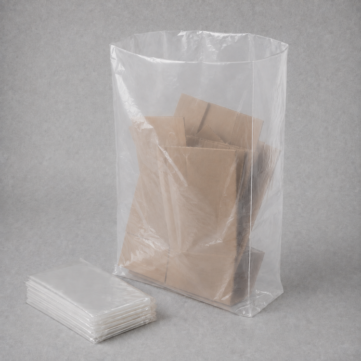
Bins, waste, recyclable materials, cleaning equipment and accessories shown in our product images demonstrate potential applications only and are not included with the sacks.
Waste containers vary in width, depth, height, shape and rim design. Therefore, measure your bin carefully before ordering and allow sufficient material for the sack to expand, fold over the rim and close after filling.
The yellow shade and appearance may differ slightly from the product photographs because recycled polythene can vary between production batches. Lighting, photography and screen settings can also affect how the colour appears.
Additional information
| Weight | 10 kg |
|---|---|
| Colour | Yellow |